Your sewing prep habits can make all the difference in your sewing experience and a polished end project.
Try these small tasks that will save you time, help prevent mistakes, improve efficiency to make the whole sewing process more satisfying.
Keep Your Machine Cleaned and Oiled

Number one in importance. Keep your machine clean and oil moving parts. Dust and textile fibres are one of the primary harms to your machine. I like to ‘groom’ my machines after every project so it’s ready to go for the next time. Turn off your machine and remove thread. Remove all lint and dust with a small brush. Use tweezers to pull out any stuck fibres. I use rubbing alcohol on a clean scrap piece of cotton and wipe down the bobbin case to remove fine lint and dust. Wipe down the needle and needle movement. Use a small drop of machine oil to metal on metal parts or as instructed in your particular machine model instructions.
Sergers are particularly prone to fibres from the cutting involved. Make sure you give it a good brush out. Twice a year, I take mine completely apart and thoroughly clean the insides from lint and oil.
Change Your Needles Regularly
Check your needle before starting each project to ensure it’s not flawed AND the needle size/type is appropriate to the fabric type you are using.
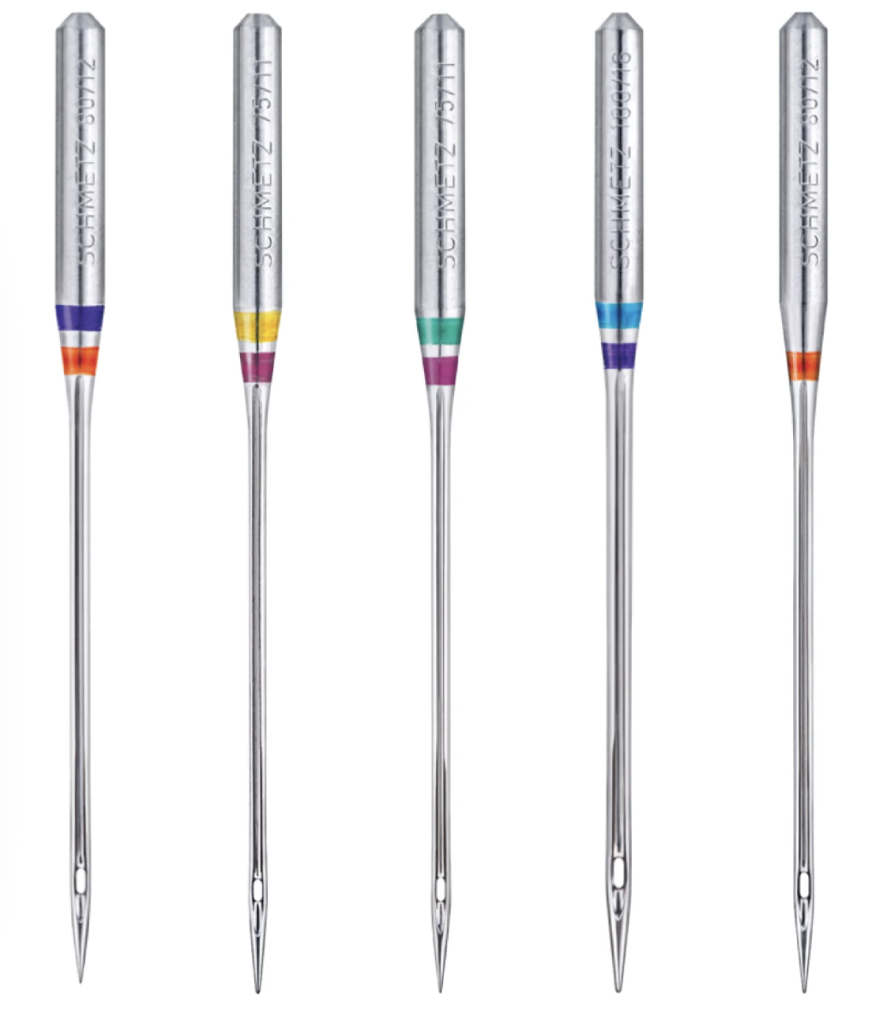
A flawed needle can easily chew up delicate fabrics or cause skipped stitches. You know if your needle needs replacing by feeling the needle tip. If it feels slightly burred, rough or slightly bent, it’s time to change it out for a new one.
A too big needle on finer weight fabrics will leave unsightly holes in your seam allowance stitch lines. A too small needle used on heavier fabrics will end up bending or breaking trying to get through thicker fabric layers.
Needles are an inexpensive insurance against damage and disappointment.
Clip Your Threads as You Go
Always clip your threads as you go. It can be tempting to do one full clip sweep later, but that can actually lead to more time spent trying to sort through threads.
Tail threads getting caught in your seam stitches are hard to remove after the fact. It usually involves using a seam ripper to delicately pry them out and then snip them off which opens an opportunity the project will get clipped as well. There isn’t a way to fix snipped holes in the finished portion of your project.
Stitch Lengths
Standard stitch length: 2.5mm setting on your machine. It will give 10-12 stitches per inch.
Lightweight/delicate fabrics: 1.5mm-2mm gives a shorter stitch length to avoid fabric puckering or ruffling.
Heavyweight fabrics: Use a 3.0mm setting. The lengthened stitch helps needle to travel smoothly through thicker layers.
Topstitching: 3.0mm – 3.5mm. A longer length gives a defined, clean and professional look on finished edges or pockets.
Staystitching: 2.0 mm. A short stitch used along curved edges (like necklines) that help prevent stretching as necklines have a bias component.
I keep a small notepad and pen handy to jot down the stitch lengths I’m using in certain conditions where stitch length changes are necessary or desired on any given project.
Set Up Your Iron and Ironing Board
Before you sit down to start your project, set up your iron and ironing board. Pressing seams as you go will make all the difference in a professional finish to your project. Finger pressing just doesn’t cut it!
Tool Accessory Tray
Keep your tool accessory tray close by so it’s simple to reach for as needed. Your tray should hold all the small tools you might want or need. Primary tools include a seam ripper, small pair of clipping scissors, bent angle tweezers, extra bobbin cases, a corner and edge sharpener (a non-sharp tool for clean, sharp corners), a safety pin or elastic/drawstring bobkin, measuring tape, pins or sewing clips.
Small Habits | Big Difference
All of these steps do not require new skills or expensive tools. Incorporated with intention, they will become automatic. Once they become second nature, you will be very satisfied with the overall process and more importantly, a beautiful, professional looking finished project.